Fire Emblem: Fortune’s Weave reaches a new high for the series
Fire Emblem: Fortune's Weave sets a new series benchmark by blending sci-fi, high fantasy, and antiquity. Players control Eshmel, sent back in time to guide four Flame Lords through the Heroic Games and prevent the Demon…
Source: GameSpot Reviews
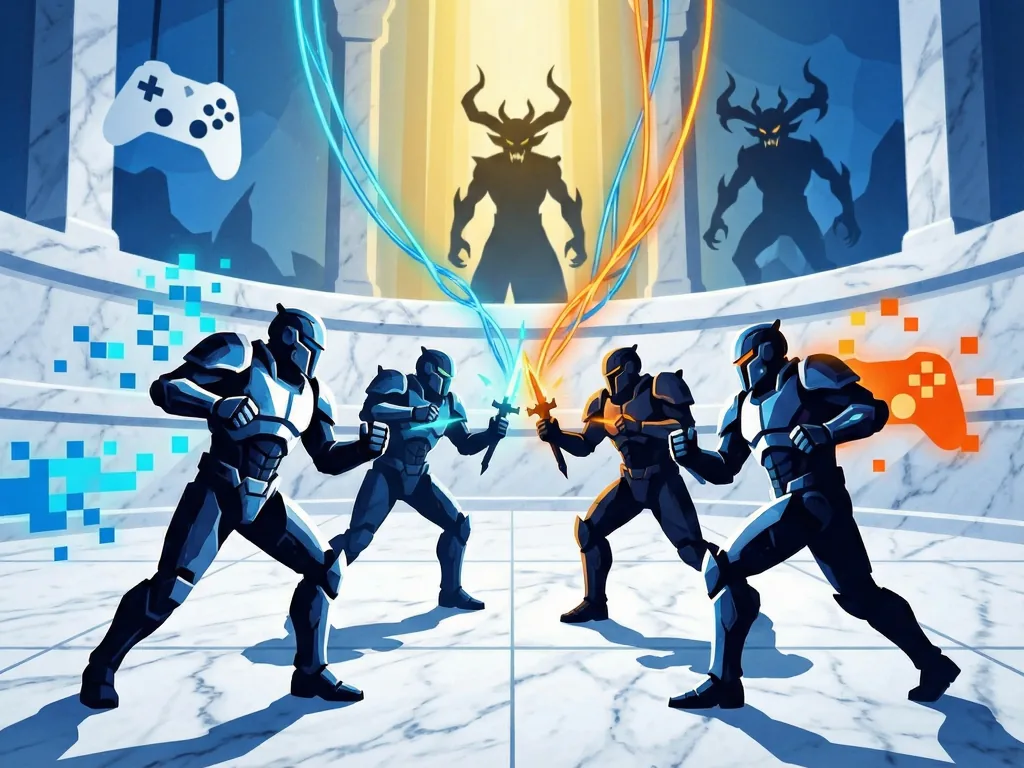
Even for a series celebrated for its expansive reach, Fire Emblem: Fortune's Weave swings for the fences. Nintendo and developer Intelligent Systems clearly built this newest installment with lessons drawn from Three Houses' triumphs, Engage's stumbles, and even some of the franchise's older quirks. Fortune's Weave delivers for players who want both densely interconnected storytelling and layered, interlocking RPG mechanics, setting a new benchmark for the series.
The game's structure often resembles ripples spreading outward, continuously widening and deepening your grasp of its systems and its cast. It's so enormous that finding a starting point is tough, so I'll begin where the game does: in the future.
Or at least, in a futuristic science-fiction setting that stands in sharp contrast to what the series usually offers. From the very outset of Fortune's Weave, your custom character, Eshmel, is literally manufactured, brought into being through sci-fi-flavored magic as humanity's final hope against the Demon Lord's army, which already stands on the brink of total conquest. Fortuna, the Goddess of Fate, is working alongside humanity's last strongholds and spots a chance to flip the odds in your favor. Four pivotal heroes, the legendary Flame Lords, can be persuaded to join the coming conflict, so Fortuna dispatches Eshmel backward through time to a crucial juncture in the Flame Lords' lives to serve as their guide. That juncture is their participation in the Heroic Games, a gladiatorial and tactical take on the ancient Greek Olympics.
This immediately injects the story, and each Flame Lord's personal arc, with forward momentum. You know from the start that your ultimate fate points toward a major escalation, but you also know these four figures are extraordinary, destined for greatness in ways that make them turning points in history. In many tales like this, you follow individual protagonists and gradually learn of a mysterious visitor who reveals a grander destiny. In Fortune's Weave, you are that mysterious visitor, armed with hidden knowledge they lack, which creates a fascinating dynamic as you watch their lives play out.
This premise also forges a setting that boldly fuses tropes from antiquity, sleek futuristic science fiction, and high fantasy. Whatever specifics you choose in character creation, Eshmel carries an otherworldly quality that seems conspicuously out of place in the nation of Dagda, which draws obvious inspiration from ancient empires, and both Eshmel and the Flame Lords routinely interact with actual gods and goddesses. It's a gripping blend of storytelling motifs that feels fresh and new for this series.
Fortuna stresses how critical it is to recruit the Flame Lords to have any genuine shot at defeating the Demon King, but you can actually head to the endgame whenever you like. After finishing the prologue, you could technically march straight into the final battles alone. I wasn't bold enough to try it, but I'm certain some impressive Fire Emblem veterans will manage it. For me, simply having the option underscored a central theme of the game. You constantly face choices about how to approach nearly every aspect, right down to its core structure. You can play and pivot however you wish.
The four Flame Lords can be tackled in any order, and each has a personal reason for entering the Heroic Games, where the champion is promised a single wish. Cai is a young boy hoping to free his father from a false imprisonment; Dietrich is a master swordsman seeking to prove himself against the toughest opponents; Theodora is a freshly crowned warrior queen who wants to right a historical wrong for her people; and Leda is a dancer and refugee who sees the games as a chance to get close enough to her father's killer to take revenge. Each premise is compelling, though I've only played through Leda and Theodora's stories so far. Each of them is driven to a fault, obsessed and single-minded, even when their motivations are ostensibly just or even noble.
You spend a great deal of time with whichever hero you choose, gaining insight into their motivations and desires as they navigate the twists of their individual stories. And that's one of the most impressive feats in Fire Emblem: Fortune's Weave--these stories satisfy on their own as standalone narratives, but grow even richer in conversation with each other, and with the larger story of the war against the Demon King. It's a layered narrative that builds upon itself and becomes more compelling the more you explore it.
Once you enter a Flame Lord's story, you can play it to completion or jump out to sample others. Again, you always have choices. But the individual Flame Lord stories themselves have a smooth difficulty curve, ramping up the challenge as you continuously recruit more forces, upgrade skills and equipment, and unlock new classes.
That does mean you have to repeat some easier missions when you start a new Flame Lord's quest, but the strength of the narrative pulled me through those easier missions. And a series of Notable Deeds grants you currency to spend on things like universal XP boosts, which create a glide path to maintain momentum as you go back to visit other Flame Lords from the beginning.
The structure of the Heroic Games is simple. You climb a bracket of competitors, starting with lower-level recruitable characters and building your way up to more serious opponents, sometimes including the other Flame Lords. The matches are set for specific days on the calendar, giving you downtime between story quests to partake in side quests and paralogues, recruit new units, etc.
While the Heroic Games take place inside the capital city of Dagsion, there's a massive world map outside its walls to explore. I found the map movement a little clunky, as you have to select an action (move, wait, search, etc) on map nodes before selecting a direction to move a limited number of spaces, similar to a board game. The idea, though, is that every action you do outside of Dagsion's walls--and some that you do inside--makes time pass. You can't simply farm random encounters to get overpowered for the main quests. You have to manage your time and make use of it wisely to balance the various demands of side quests, leveling up, and making progress on recruiting new team members. It sounds daunting, but I found the system was flexible enough to absorb some time wasted without feeling too punishing. For those who want to take on the toughest challenges with permadeath turned on, however, I expect this system to be a satisfying challenge for meticulous min-maxxers.
Similarly, some activities in Dagsion can only be performed weekly. Those include giving gifts or attending a play--sorry, you can't simply love-bomb a character you want to recruit--or training at the Arena. It also includes performing acts of service at the temples of the gods. Some characters are naturally more pious than others, granting bigger bonuses to your acts of worship. And each god grants you a special benefit that can be used in battle. Fortuna is unlocked from the start, letting you rewind turns, but there are others to be discovered with important passive benefits that can turn the tide of battle.
Exploring the map outside of Dagsion is a must, because it's vital for completing your Flame Lord's individual quests and gaining Renown. Each Flame Lord has their own specialized quests, and those give you much bigger bonuses to Renown points than any other side quests. Theodora, for example, has to scour the world searching for supplies to send back to her nation, while Leda gets tips about taverns in distant cities where she can perform. Those grant you regular rewards like any other side quest, including even unlocking some specialized classes early, but the real reward is Renown.
Renown is an important resource because it's one of two factors that determine who you can recruit. The other is Support, which you gain by improving your Flame Lord's bond with another character via giving gifts or sharing meals. I found progressing this stat fairly slow, so it can take time to win someone over to your side--even as the ticking clock of the game means you may not manage to recruit everyone you had your eye on. Fortunately, there's a good variety of recruitable characters with different level requirements, so as long as you're making a little progress with several at a time, you'll get a decent flow of additional allies.
Randomized battles also populate the world map, along with dungeons that can be explored in third-person a la Fire Emblem: Shadows of Valentia. Those provide a nice change of pace and a different way to engage with the world, granting you a little experience boost by taking part in more traditional turn-based RPG combat. Once you're sufficiently overleveled for a dungeon, you can farm experience by simply striking an enemy without triggering the combat, making this an even more streamlined way to quickly gain treasures and experience. I never found them very challenging, but they seemed more intended to break up the pace, and they worked well for that purpose.
The best missions, of course, are those involving traditional tactical combat. Fire Emblem is second to none in this regard, and Fortune's Weave manages to improve on it further. The main quests always find ways to add new wrinkles to combat scenarios, forcing you to think differently and staving off the complacency that can come from having a powerful team.
In one memorable battle, I was being targeted by a long-range attack, requiring careful movement and creative blocking while I slowly advanced. In another, I would lose if any enemy units reached a certain goal line, but their forces were so overwhelming, and reinforcements so frequent, that I quickly realized I had to prioritize cutting my way through to the one enemy unit whose defeat served as a victory condition. Sometimes I needed to keep my forces tightly packed together to take out tougher enemies, while, in others, I had to spread them terrifyingly thin to address dispersed threats. What's so satisfying about these challenges is that the game never explicitly explains how to resolve the puzzle; it just presents you with a scenario and presses you to figure out the solution. My own conclusions certainly aren't the only ones possible.
Aiding you in combat are two types of special abilities: Combat Arts and Blaze Arts. Combat Arts are available to all units as they level up and specialize in skills, letting you perform special actions at the cost of weapon durability, which can then be repaired at a Blacksmith. Blaze Arts are reserved for special characters, letting you sacrifice HP for powerful effects. Theodora, who is imbued with a magical, superpowered prosthetic arm, can grab a hunk of stone from the earth and chuck it great distances, for example, while Dietrich can teleport forward to strike down an enemy before they even see him coming, and Leda has a series of special dances that buff her allies. New Blaze Arts are offered as you take part in the quests to improve Renown, so all of the systems feed into each other nicely.
However, all this complexity does come at a price. While the battles themselves are snappy and intuitive enough for newcomers to understand, the menu user interface is overstuffed, and at first it was hard to find certain elements. I got accustomed to it well enough after several hours, but there's just a lot going on, and I wished the UI had been easier to navigate.
With four heroes all existing in the same world and timeline, the game doesn't lock you into a single path. You can bounce between their campaigns, and the game actively encourages it. The result is a sprawling, interconnected web of narratives that rewards curiosity and careful planning alike. It's a lot to juggle, but for players who thrive on deep systems and layered storytelling, Fire Emblem: Fortune's Weave offers one of the most ambitious and rewarding experiences the series has ever produced.
TagsFire EmblemNintendoTactical RPGIntelligent SystemsFortune's Weave
Comments (0)