The Blood of Dawnwalker tempts you to do everything but deliberately holds you back
The Blood of Dawnwalker is a grim medieval action-RPG from Rebel Wolves set in a vampire-ruled valley. A 30-day countdown drives its quests, while day-night shifts between human and vampire forms shape combat and choices…
Source: GameSpot Reviews

Few tales in The Blood of Dawnwalker wrap up on a happy note. That's hardly surprising for a grim medieval action-RPG set in an isolated valley where vampires rule and humans are expected to offer up their blood and their obedience. Expecting anyone to walk away unharmed may be wishful thinking, yet developer Rebel Wolves deserves credit for giving nearly every story enough layers and subtlety to keep all the carnage and sorrow gripping from start to finish.
Dawnwalker packs in what feels like an absurd number of quests. At first glance they look randomly assembled, with no single thread tying them together—just a narrative you piece together by accepting whatever jobs seem worth your scarce time. What's striking is how well written they all are, from elaborate tales of rebels battling to liberate the valley and vampires pursuing secret schemes, down to the brief bit of setup you overhear from a cluster of soldiers by the roadside right before you cut them down. The game earns enough goodwill that you'll probably want to complete everything in Dawnwalker. The simple fact that you can't is part of what makes it so gripping.
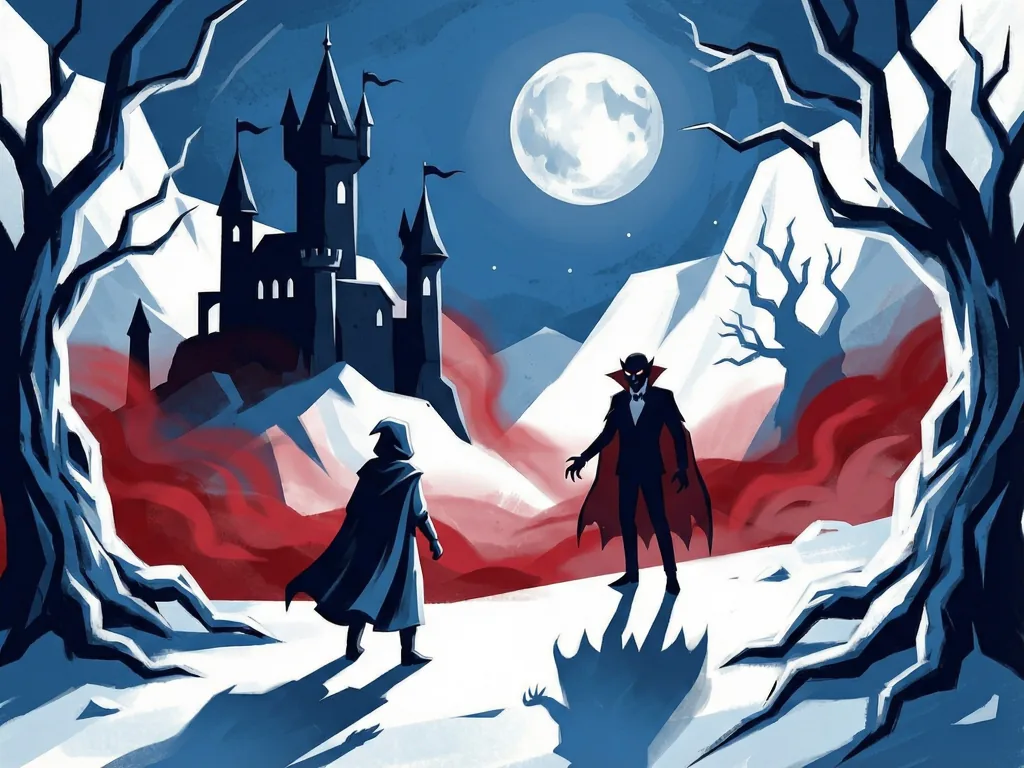
Dawnwalker's story runs on a ticking clock, and that mechanic ranks among its finest ideas. You play as Coen, a human whose family is taken from him by Brencis, the valley's vampire lord. Coen soon learns that Brencis plans to hold a feast in 30 in-game days, giving you that much time to prepare and storm the castle to free the captured humans—strengthening yourself, recruiting allies, and settling on a plan before the deadline arrives.
Time moves forward when you accept or finish quests and activities. Each one consumes a set amount of time, so you're constantly weighing whether to spend it on one quest or another. Wasting time on side activities while a quest is active can shift the situation or even cause it to fail, so piling up 50 tasks is a poor strategy. You have enough time that you don't have to agonize over every hour, but the sense that the clock is working against you lends weight and significance to everything you do in Dawnwalker. It might also make you hesitate before stopping to help a minor character you meet, or before picking a merciful but slow option over a quicker, crueler one.
Time also shapes how you approach quests. At the end of the tutorial, Coen is forcibly turned into a vampire, but due to this world's supernatural laws, he unexpectedly becomes a Dawnwalker—he shifts into a vampire when night falls and returns to human form under the sun. During the day, human Coen can chat with shopkeepers or slip into occupied settlements looking like anyone else; if he clashes with Brencis's soldiers, he does it with a sword. At night, Coen is deadlier in combat but far more conspicuous, and enemies usually attack on sight. A location might be open to the public by day and forbidden after dark, so when you choose to tackle a problem can change how you solve it. Naturally, some events only occur during the day, while others only happen at night.
The cleverest use of time against you shows up in Dawnwalker's progression system. Leveling happens passively as you earn experience for completing quests and defeating enemies, raising your overall stats, but unlocking new combat abilities or boosting things like your health pool and stamina bar requires more effort. To gain skills for human Coen, you must find and read books and manuals; for vampire Coen, skills unlock as you drink the blood of humans, animals, and other vampires. Unlocking perks costs points earned through leveling, plus time.
This means making yourself stronger always involves tradeoffs. Do you want to power up at the risk of failing or delaying a quest? I found myself constantly sitting on perk points in Dawnwalker, waiting for a moment when spending them wouldn't cost me a key opportunity. As a result, I sometimes took on quests without maximizing my capabilities. That push and pull turns leveling up into a deliberate, important decision about how it might affect Coen's larger goal.
Where this leveling system stumbles is in what it actually delivers. Coen has three separate skill trees you can buy perks from, each tied to a different facet of his character. Coen is a talented swordsman and can use his claws as a vampire, while he gains access to witchcraft powers in human form.
The system hands you plenty of options, many upgradable multiple times, and it feels intentionally built to induce choice paralysis. Since you likely aren't investing in everything because of the time cost, you're forced to consider which upgrades matter most to you, and whether you're leaning too heavily on one set of perks over another, which could leave you exposed during certain hours.
The problem is that the trees are stuffed with upgrades that don't always feel meaningful. Part of the weakness stems from abilities being equipped into menu slots, and to equip more of them you must also unlock new slots by spending perk points and time. That limitation can push you to equip a couple of active and passive abilities and never swap them, effectively turning the rest into dead spots on the tree. And since most abilities require finding books first to unlock them, you might be locked out of a perk permanently, or long enough that chasing it stops being worthwhile.
Demanding so much thought about how you build Coen makes it easy to dismiss many of your options—not because you're deliberately crafting a character, but because of the quests you happen to pick throughout the game. I barely touched his witchcraft abilities, for instance, since they cost health that human Coen often couldn't spare, and their books weren't as readily available. I spent perk points on witchcraft abilities I never really used, and eventually ignored much of that tree in favor of more practical sword skills.
And while you'll unlock some entertaining combat abilities, the fact that you might rely on only a couple of them for huge stretches weakens Dawnwalker somewhat, because you'll be fighting constantly. Brencis's soldiers dominate the valley, and although you'll talk your way through many situations, combat is the core of Dawnwalker's gameplay, so the rhythm of repeating the same few abilities can wear thin.
Dawnwalker's combat is still quite good, strengthened by its directional focus. Coen swings his attacks in a specific direction based on where you hold the left analog stick, and the idea is to break an enemy's guard by swinging around their blocks. In practice, directional swings are more erratic and hard to use well, but they also don't really matter. Where directional combat truly shines is on defense—if you push the analog stick toward the direction your opponent is swinging from and hit block at the right moment, you can parry their strike and counterattack.
How you fight is governed by a stamina meter, and stamina fuels attacks, dodges, and Coen's "omniblock," which deflects any incoming blow. Directional blocking, however, costs no stamina and actually triggers its recovery, so to maintain a fight's pace you need to land skillful blocks, or you'll run out of stamina and get swarmed. Enemies often attack Coen in groups, too, so you have to watch for attackers from the sides, whom you can deflect away and strike briefly before returning to your main target.
It's a great system that gives fights the rhythm of a duel, with the back-and-forth between you and your opponent demanding quick reactions, all happening fast enough that you're rarely waiting for an attack to parry. With multiple enemies, you must pay close attention, and I genuinely felt like a world-class swordsman as I turned away opponent after opponent. Trading blows and parries builds up "activation points" that can be spent on special abilities like stunning enemies or hitting several at once. And even though you'll play through hundreds of battles, the emphasis on quick reactions and seizing openings keeps them exciting, even when you're facing groups of soldiers who have fought more or less the same way for 40 hours.
What irritations arise from combat come from how much of it you do, and how it feels is largely determined by the kinds of enemies coming at you. The directional combat approach is engaging, but it also means fighting as Human Coen and Vampire Coen function very similarly, despite their differences. As a vampire, Coen can fight with his claws, but they deflect blows from soldiers and monsters the same way a sword does. The major differences come from which special abilities you can use, which are often unblockable or interrupt enemy attacks. That can downgrade their use from a tactical deployment at a key moment to something you fire off as soon as an activation point appears and a move's cooldown ends. Even though the human and vampire are meant to feel distinct—one more calculated, the other more aggressive—they end up playing more or less the same way, especially over a long stretch.
Another big difference between the two sides of combat comes from how you manage health. Vampire Coen has a bunch of perks that boost his survivability. You start with an ability that lets you briefly bite an enemy's neck to drain some blood and restore health, which is a huge boon early on. The vampire side also has some extremely powerful perks like passive health regeneration, plus ones that restore health when you parry and when you attack with your claws. You also get bonuses from weapons and armor that passively boost various traits, including health. By the end of the game, I felt practically unkillable as a vampire, since my health often regenerated faster than enemies could damage me.
As a human, fights are far more harrowing, since your healing options are limited to eating food between battles and using items equipped to quick slots during combat. You can't refill quick slots while fighting, so you must manage them carefully, and food is less effective in combat, pushing you toward medicines you can craft. Where you can reliably restore health through combat abilities as a vampire all game, as a human you have to wait for openings to use a medicine and make sure you've packed enough to stay alive. This makes fighting as a human tough and active in interesting ways, but it also incentivizes you to take on whatever battles you can with your safer, more powerful vampire abilities.
Dawnwalker does include a fairly granular difficulty system you can adjust throughout the game, and it's definitely worth tinkering with. You can separately adjust combat difficulty, controlling things like parry windows and enemy damage, and RPG difficulty, which governs elements like Coen's stamina costs and healing. At the default settings, the balance felt easy to throw off, so adjusting both was useful to keep Dawnwalker from becoming frustratingly hard or feeling too easy.
While they don't always fire on all cylinders, what stands out about all these systems is how intricate and deliberate they are, how much the game wants you to think about the ways you engage with them, and how many bold swings they take. It's fun to think so deeply about
Source: [Publication name]
TagsThe Blood of DawnwalkerRebel WolvesAction-RPGVampireTime Mechanic


Comments (0)