Resonance: A Plague Tale Legacy — Our Review
Our review of Resonance: A Plague Tale Legacy praises Asobo's scrappy double-A spirit, exemplified by quirky design like the all-purpose R3 button. The third entry follows thief Sophia, swapping stealth for sword combat …
Source: Eurogamer Reviews

Naming your game "Legacy" practically begs the question of what legacy it's building — and, by extension, what its identity really is. (Fans of Jason Bourne may also appreciate "supremacy" and "ultimatum" being saved for later.) That might sound like a strange thing to say about a game boasting some of the most striking faces and locations you'll see this year. But to me, A Plague Tale is spiritually double-A — and I mean that as a genuine compliment. I can't help but root for this series: it retains a scrappy-underdog quality, even as its credits roll keep growing with every entry. Part of that is surely because Asobo doesn't command the budgets or headcount of Sony or Microsoft's first-party studios, or any of the megapublishers. But mostly, it's because the game makes the kind of design and storytelling decisions that would likely be smoothed over or cut entirely by the big-budget company it clearly wants to sit with at lunch.
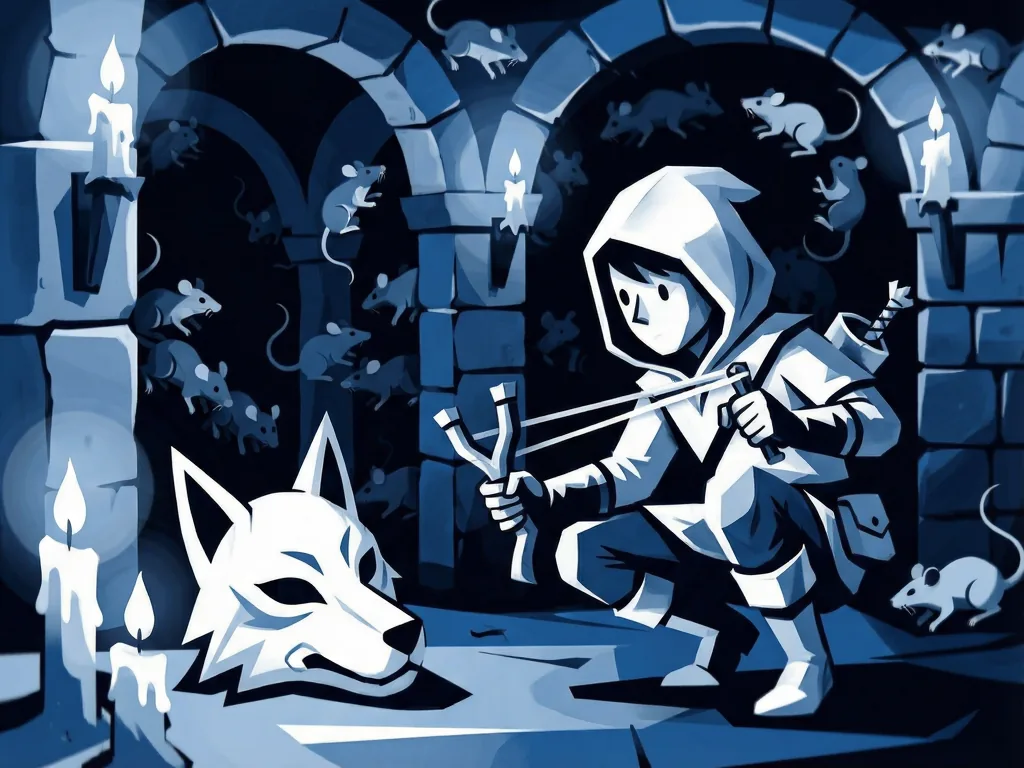
The R3 button does everything
Let me give you an example. Approach one of the many massive ancient doors in Resonance and a small circle appears. Walk closer and it becomes a button prompt — for which button? Guess. No, not that one. Not that one either. Wrong again. It's R3! That single button handles squeezing through gaps, crawling through tight holes, inspecting trinkets, inserting spherical keys into receptacles, and even picking up a dropped knife and hurling it at an advancing enemy. That sounds slightly unhinged, yet somehow it suits this game perfectly. That, right there, is the double-A spirit.
Three games in, the series still hasn't settled into a fixed formula, which I find genuinely encouraging. The first game was a smartly written, superbly paced narrative action-adventure with admittedly basic forced stealth — though that simplicity let me enjoy something that usually makes me groan: I never tired of bonking clueless enemy soldiers and watching rats strip them to bone in seconds. For 2022's Requiem, Asobo broadened its action and stealth options along with the size of its environments, but pacing suffered, and the sequel lost some of the first game's twisted humor, especially during its relentlessly grim, maudlin finale. Still, both games had plenty to admire: you could sense a studio trying on borrowed ideas, keeping the ones that fit, and adding clever twists to make them its own.
A thief's story, with swords this time
So it's fitting that the third game centers on a plunderer — and a character we already know a little. Like the De Runes, Sophia had a rough childhood: as a girl, she was subjected to cruel experiments by nuns. Eventually rescued by her father, she found a home among his band of rogues and thieves, whom you meet in a charming early sequence doubling as a tutorial — and whom you instinctively sense won't survive to the credits. Or, in dad's case, past chapter two. Almost immediately after his lieutenant Faro takes charge, the gang comes under attack. Faro suspects betrayal — Asobo dubs the mysterious traitor "Viper," perhaps to avoid reminding players of the conspicuous absence of rodents. Fleeing with fellow thief Leni, Sophia sets sail for the Minoan island where her father died, the Viper's forces in pursuit.
Despite her profession, Sophia is notably less sneaky around human threats than Amicia ever was. Instead, Resonance adds a new ingredient to the recipe: sword combat. With stealth kills almost entirely absent, the skirmishes reminded me of Sucker Punch's Ghost duology, with a pinch of Hellblade — though Sophia is a far more agile fighter than Senua.
There's a detectable but oddly charming clunkiness to how the inciting incident unfolds — proof that Asobo lacks a Naughty Dog's resources but is determined to compete anyway. In pursuit of triple-A respectability, Resonance introduces a parry mechanic, complete with the obligatory poise meters on enemies. But while timing your left bumper presses helps, it's hardly required. You can spend Resonance points — shiny collectibles earned through exploration and encounters — on specialisms instead. Dislike parrying? Upgrade Sophia's dodge into a double dodge. Love parrying? Trade a shorter window for bigger stun power. Rather than a sprawling skill tree of marginal gains, you get a handful of meaningful upgrades, freely respecable at any time.
Her kick can chain into a second, and kicking enemies into scenery or each other leaves them open to a damaging charged stab — which can itself be enhanced to absorb yellow parryable attacks or red unblockable ones. Each skill offers two mastery paths: I chose a double-dodge granting near-invincibility, but could have picked the riskier option where Sophia deals bonus damage spinning with her blade.
Even though combat isn't really what I want from a Plague Tale game, I never rolled my eyes when a new enemy group appeared. It's supported by a charmingly boho gear system too: armbands, beads and bangles that might boost your odds of dodging arrows or surviving lethal blows. In a nice touch, these items stay physically visible on Sophia throughout — even if you wonder how they survive her more brutal ordeals. Either way, it's good motivation to loot every area thoroughly.
Old-school Tomb Raider energy
For exploration, Asobo turns its magpie eye toward Tomb Raider — and mechanically, it's more classic Lara than her rebooted self. Guidance is daringly sparse in places: no map, and the hint system not only requires holding down a button, but only gently steers you when you do. Especially in the middle act, the game is happy to let you get a little lost, or pleasantly stumped.
The Minoans, like most ancient civilizations, apparently loved light-reflection puzzles, and the ones here are mostly enjoyable — though I'd quibble with the Steam blurb calling them "ingenious." The payoff is always worth it: long-dormant mechanisms rumbling and clanking to life at your touch rank among my personal favorite joy-sparking video game things.
Periodically, Sophia also sketches environmental clues as she finds them — a cute touch seemingly borrowed from one of the Uncharted games (itself a practiced pilferer) that makes me wonder if Asobo considered subtitling this prequel A Thief's Beginning. On the notebook screen, you can guide her hand across the sketches and tap them for observations that may nudge you along. (Sophia could also have a lucrative side career as a hand model; these are not the fingers of someone who's done the climbing and stabbing she has.)
Resonance peaks in its first half, particularly during a long stretch of puzzle-driven exploration dotted with trap-filled challenges and the occasional fight. Here, Sophia and Leni banter at length about what to name the boat they dream of sailing around the world together. That these conversations unfold between bursts of brutal stabbing and slicing is weird but deeply endearing. Actors Anna Demetriou and Lisa Delamar perhaps lean a little too hard into the couple-y vibe — these hardscrabble bandits sound as pampered as the De Runes did. "Even the mosaic reminds me of San Marco's!" Leni chirps at one point; close your eyes and it could be a pair of Made in Chelsea cast members comparing trattorias.
Descending into the dark
Inevitably, Asobo moves away from sun-kissed exteriors and this lightly sociopathic banter, revealing dark secrets held in reserve. As Sophia delves deeper into the ruins, her childhood visions grow stronger, transporting us back in time to a mythic figure with whom she shares an unlikely connection. And there's a far deadlier threat lurking — one even your armored rivals can't handle.
Here at last comes tense sneaking, as this terrifying foe hunts sudden movement and noise but recoils from light — though sometimes you'll have no choice but to run and squeeze through narrow gaps. If the R3 squeeze wasn't enough to freshen up that triple-A staple, it's deliciously horrible when the "walls" are actually corpses — and worse when they start twitching. There's a delightfully unpleasant twist on "loud enough to wake the dead," plus a new enemy type that nods to Resident Evil 4, never a bad place to borrow from.
Olivier Deriviere's score deserves its usual praise: frantic strings and thudding percussion vie with authentic, mournful Greek-Cypriot vocals.
Yet even while mixing things up, Asobo repeats its Requiem mistake and ladles on the trauma in enormous servings. You'll regularly traverse artfully horrible tableaux of corpses — from the freshly dead to the desiccated variety, locked in eternal grasping agony. Some sights here might strike Hieronymus Bosch as "a bit much." Granted, you don't play a game with "plague" in the title expecting a jolly time. But what felt impressively pitiless (and occasionally darkly funny) in Innocence here becomes a full plunge into abject misery.
And yes, bleakness arguably defines a Plague Tale game, beyond its double-A-ness (don't say it out loud). But it's hardly unique in that. I'm not especially squeamish, yet I find it strange — not bad, just odd — that so many mainstream third-person action-adventures lean this hard into relentless suffering, when Resonance proves this studio is at its best when it lets a little light and humor in.
The question now is whether Asobo listens to that lesson for the series' next chapter — or doubles down on the misery.
Source: Eurogamer
TagsStealthGame ReviewAction AdventureResonance A Plague Tale LegacyAsobo Studio




Comments (0)