Mortal Shell 2 review: a worthy sequel to the soulslike debut
Mortal Shell 2 is a confident, standalone sequel that improves on its debut in nearly every way. The striking festival prologue, stamina-free combat, refined Resolve system, and playable backstory vignettes make it feel …
Source: Eurogamer Reviews
Few genres demand as much from a game's opening moments as the Soulslike, and Mortal Shell 2 passes that test with flying colors. The intro doesn't just set the tone — it compresses the next 30-odd hours of magic into a handful of minutes, then keeps delivering.
A Festival With a Dark Purpose
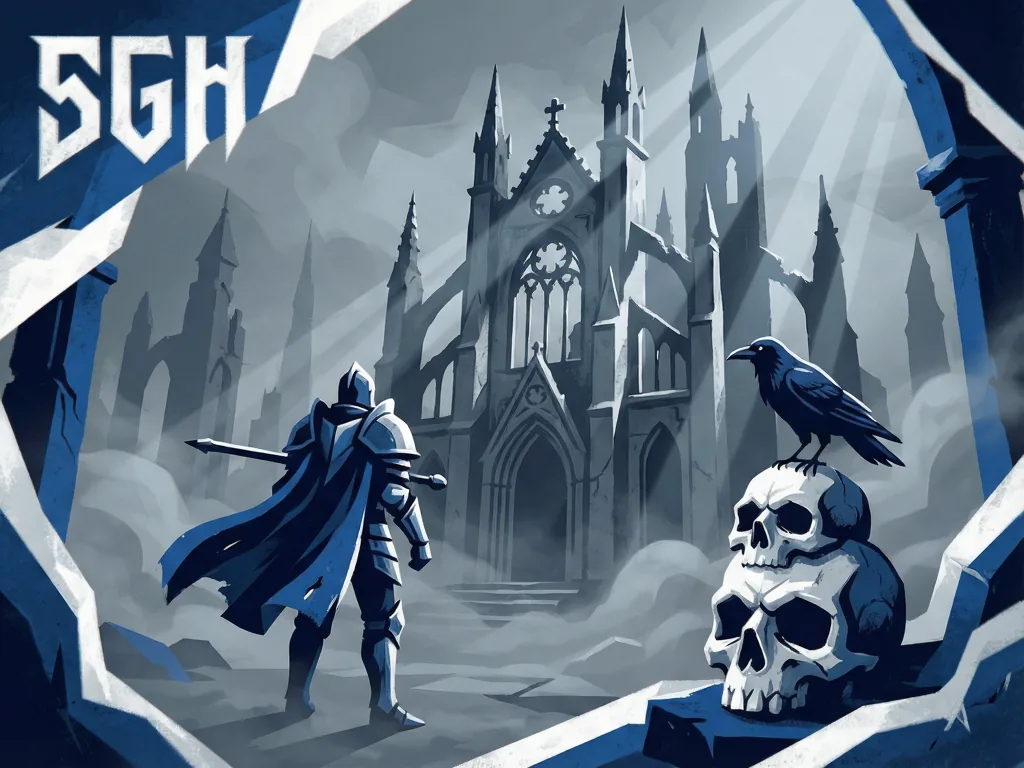
You wake to a whisper, then meet a talking crow perched on a human skull — classic Soulslike fare — who explains that you're not of this world, and neither are the people you're about to encounter. What follows looks, at first, like a cheerful village festival: music plays, children sing, a woman asks you to dance. But listen closely and the vibe turns distinctly Midsommar. Everyone murmurs about dressing their finest to "meet Mether," and the road through the village dead-ends at a pyre, where the festival's true purpose becomes grimly clear.
Things conclude the way you'd expect. Your character shares a moment with Mether herself, grabs an oval egg, and moves on — at which point Harros, a returning Shell from the first game, is reintroduced. Once you embody him, the game opens up and shows off its best qualities in one confident sweep: grounded, brutal combat, no stamina bar, Shell abilities, generous parry timing, the Resolve system, and new sidearms. By the end of the prologue I'd cut down countless enemies and several bosses, and the prologue closes by emphatically severing ties with the original.
From Audition to Headliner
The first Mortal Shell played like an indie riff on Dark Souls 1's pacing, minus the RPG mechanics. It borrowed the stamina-bound rhythm of classic FromSoftware combat, but also pitched its own ideas — most notably Hardening, which let you turn to stone at the press of a button instead of blocking. It felt like an audition for a seat at the Soulslike table: clearly a first attempt, but full of passion.
It had drawbacks, too. Just four Shells, each mapped to a stock RPG archetype, gave it limited depth, and the final third ran out of steam with underpopulated areas and a sudden difficulty spike. Still, the earnest ambition was easy to love, even with the technical rough edges.
Mortal Shell 2 is a far more accomplished follow-up — one that could plausibly sit among the genre's best. Nearly everything has been overhauled, replaced, or refined. That's likely why it's positioned as a standalone sequel: same broad world, some returning Shells, and only occasional nods for lore devotees.
A Story of Eggs and Emptied Shells
The setup is self-contained and easy to follow. The Undermether, a god of unknown origin, crash-lands in the realm after a foul creature latches onto her. She was carrying many eggs (Ova), and the humans who sheltered her steal them. Most are corrupted; a few remain pure. You are her child — a Harbinger, hatched from one of the untainted eggs and born with immense power. Your goal: reclaim your stolen kin. In your skeletal form you can hold your own, but you're driven to find a Shell to inhabit.
The story unfolds through the factions that formed around Mether's arrival, and through her devoted servants, who shelter in a keep carved from her bones — which doubles as your hub. The Shells themselves carry personal stories, too. Like before, they're what you embody for the whole game, and you can swap between them freely. Each Shell belonged to someone who once lived in this world, and raising your bond with them unlocks more of their past and their abilities. These backstories are now told through playable vignettes instead of simple read-aloud memoirs — a big presentation upgrade — though the bonding resource is so scarce you may only see a few. Across my playthrough, I unlocked one or two memories for most Shells and fully bonded with just one.
Combat Without a Speed Limit
Combat flows faster than most genre contemporaries, largely because stamina is gone. That encourages aggression, which feeds the Resolve mechanic — a resource spent on powerful abilities and as ammo for ranged sidearms. The more melee hits you land, the more Resolve you generate.
I worried at first that this would devolve into attack spam, eroding the deliberate pacing the original handled so well. But the sequel's enemies are built around it: they're more resilient, resist staggering, and often arrive in groups. The rhythm becomes a constant dance of prioritizing threats, managing crowds, and seizing the right window for Shell abilities. Attack animations retain the tactile heft the series is known for — hits stagger enemies and visibly scar their bodies. I spent most of my run with the Veteran's Battle Axe, which is notable because I rarely pick heavy weapons; I simply couldn't resist how a horizontal swing can cleave a low-health enemy's head clean off.
This is an action game first, and it commits to that identity far more decisively than the original's somewhat muddled design. No 50-weapon arsenals here — just a handful of weapons and a few authored classes, each with bespoke animations and moves tailored to a distinct style.
Shells, Builds, and a World Worth Exploring
The Shells matter more to gameplay than to narrative. Think of them as pre-made classes from the start of a FromSoft game, each with a unique ability or two and supporting stats the game never shows you. Some resist certain ailments better, some have bigger health pools, others are built for dodge-happy players.
Most of my time went to Eredrim, an absolute unit whose shoulder charge stuns enemies for a follow-up. He may be the "easy mode" Shell — his supporting ability excels at crowd control, interrupting anyone trying to surround him, and his enormous health bar suits the headbutt-first approach. His design is suitably imposing: scale-covered chainmail, a fortress-shaped helmet, and pauldrons that make him look plucked from Warhammer.
When a Shell's health hits zero, you're knocked out of it — effectively a second chance in every fight, with no limit on how often. You return by landing melee hits (ranged attacks don't count), though each re-entry takes longer than the last.
Your Harbinger levels up, granting passive boosts to your Shell along fixed lines — everyone's level 50 Harbinger looks the same — yet late-game Shell builds can differ wildly. Build variety is arguably the sequel's biggest upgrade: eight Shells instead of four, each with a deeper skill tree offering meaningful bonuses for focused play and varied options for generalists. Trees can be respecced at any Beacon, so you can pump fire resistance before a flame-wielding boss, then refund it afterward. Your choice of Shell still dictates your playstyle, since innate stats and abilities never change.
Cold Symmetry clearly poured its creativity into these Shells. The most interesting — and technical — is Smert, who stops time and pummels enemies bare-handed, stacking random afflictions that detonate when time resumes. I never quite found my rhythm with them, but I took notes for a future run.
Most Shells must be hunted down across the world, though a rare currency can reveal approximate locations. The same goes for most weapons. I enjoyed scouring every inch. The world itself is "wide linear": open enough to run edge to edge, but segmented by teleportation gates, bridges, and connecting passages. I initially took these for technical compromises against asset streaming issues, but grew to like them — they make the world feel composed of authored regions rather than one sprawling plot. It's large enough to get lost in, and my curiosity was rewarded with discoveries nearly everywhere I wandered. Most of what you find doesn't reach Elden Ring's heights, but I lost count of the times a strange shape on the horizon pulled me off course.
Source: the original publisher
TagsGame ReviewMortal Shell 2Cold SymmetryAction RPGSoulslike


Comments (0)